

The most interesting thing about Monopoly Go might not be how fun it is, but that even though you know you’ve played it for a long time and it’s starting to feel repetitive, you still open it the next day.
In Happy Harvest with Looney Tunes season, farms, rabbits, crops, pigs, and familiar Looney Tunes characters are repackaged into a new collection cycle.
This is Monopoly Go’s consistent update style – a different theme, a new batch of stickers, a few new characters, and some new events. But if you break these things down, EZG.com finds that its core design is actually very simple: by setting small goals, creating collaborations, and increasing social connections, it continuously stacks various potentially attractive elements to attract different types of players.
189 Stickers → 21 Sets
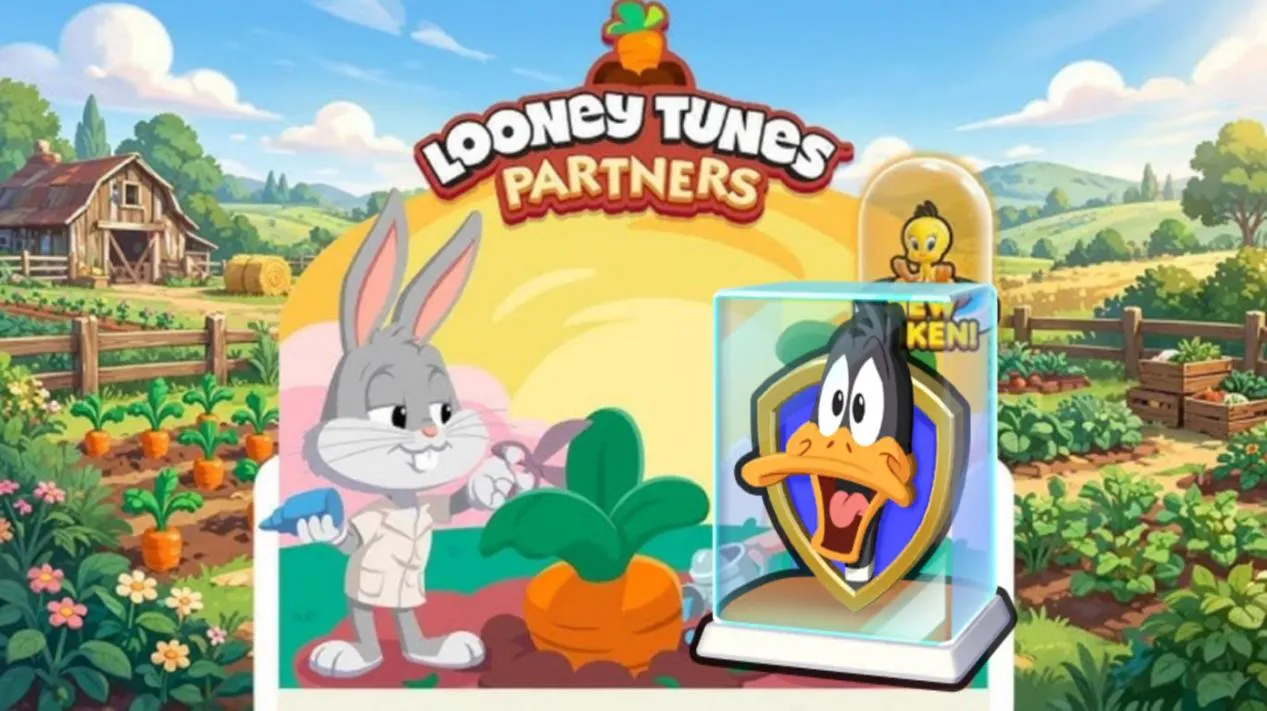
This Happy Harvest with Looney Tunes Album contains a total of 189 Monopoly Go stickers. This number seems huge, and collecting them would be difficult. However, the official strategy divides it into 21 sets, with rewards for completing each set. This makes collecting nearly two hundred stickers seem less daunting.
As a result, players aren’t thinking about collecting 189 stickers each time they log in, but rather, “I’m missing two stickers in this set.” The massive collection task is subtly transformed into 21 smaller goals. At this point, players are no longer facing a huge collection task, but a very specific gap. The real driving force is no longer the gameplay itself, but the desire to fill that gap.
And when this desire persists, players will naturally start looking for more ways to obtain stickers. Monopoly Go stickers for sale at EZG.com is a shortcut to help you fill the gaps in your album.
Clever Collaboration
Whether it’s the recently concluded Simpsons, the ongoing Looney Tunes, or the previous Harry Potter and Sanrio, these are all mature IPs with a large fan base and high recognition. For Monopoly Go, collaborating with these is clearly more than just changing the art assets; it’s about continuously injecting new emotional value and a sense of novelty into the game for players.
For players already familiar with these, a familiar character, a classic image, or even a cartoon character from their childhood can become a reason to reopen the game. Players might not be interested in a new board, but the situation is completely different when a familiar character appears on the board.
EZG.com believes that, more importantly, these IPs themselves have already completed user education. Monopoly Go doesn’t need to spend a lot of money explaining to players what Looney Tunes is, nor does it need to explain why Bugs Bunny, Daffy Duck, or other characters are worth collecting.
These IPs themselves already have a mature worldview, character recognition, and emotional connection. The game only needs to repackage this content into its collection system to quickly establish a connection between players and new content.
Thus, a Monopoly Go card, after being enhanced by the IP, becomes a desired character; a token may become collectible merchandise; and a limited-time event becomes something you can’t miss because the IP event is about to end.
For players, it appears to be a completely new season. However, for the game itself, the underlying dice, events, stickers, and reward cycles remain almost unchanged.
Partner Events
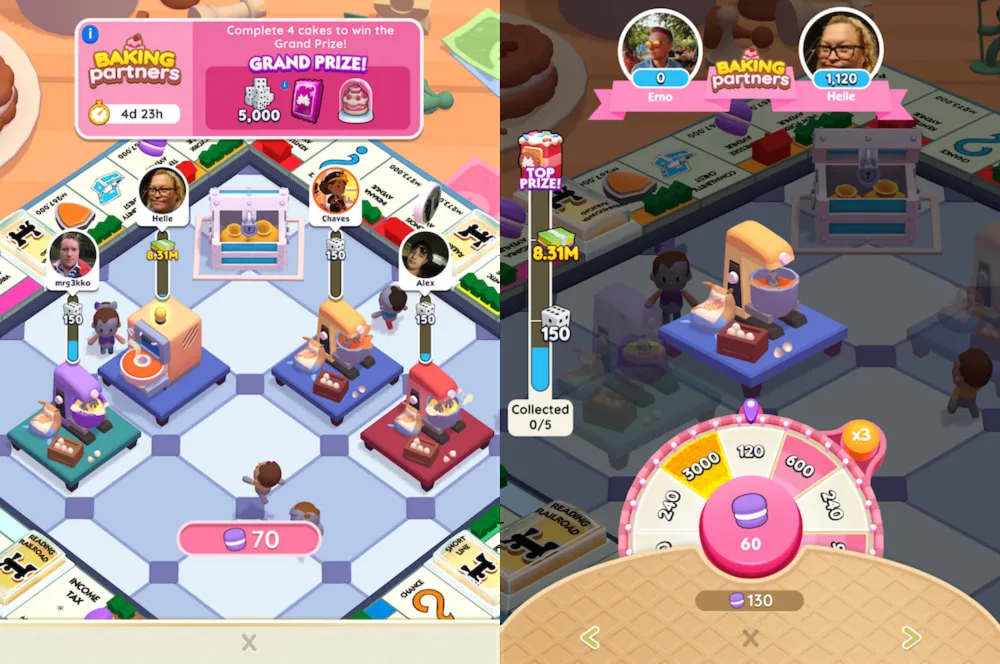
Monopoly Go’s social mechanics have a very subtle aspect – when playing alone, you can quit at any time; but things change when you team up with another player.
The most important aspect of Partner Events might not be the rewards, but rather the sense of responsibility they create. You’re no longer just completing progress for yourself. You also need to consider what will happen to your partner. This significantly changes the player’s playstyle.
When playing alone, players can easily tell themselves it’s okay not to play today. But when two people team up, this decision no longer only affects themselves. You may have already completed some progress, and your partner is also continuously investing. If you suddenly stop playing, your partner’s progress will also be affected.
Some players in the community have expressed that they are actually tired of Monopoly Go, but they still persist in completing events because they don’t want to disappoint their partners; others have mentioned that trading Monopoly Go stickers and completing Partner Events with friends has become a major reason for them to continue playing.
EZG.com believes this is also where Monopoly Go’s social design is clever. It doesn’t require players to chat in real-time, nor does it feature complex team battles. Players don’t even need to know their partners to form a very lightweight cooperative relationship.
You only need to see the other person’s progress steadily increase to realize: they’re still playing, so I can’t just sit still. When both people are engaged, their actions themselves become a form of motivation.
Limited-Time Events
Monopoly Go rarely presents players with only a long-term goal. Players encounter different Tournaments, Quick Wins, and various short-term events every day. Their common feature is that rewards are tied to time.
Therefore, not playing today isn’t just about playing less; it could mean missing out on a reward, fewer dice, or even a sticker.
Players don’t need to think, “I have to play for three hours,” they just need to think, “Let me check online, the event’s almost over, anyway.” But when this checking happens repeatedly every day, logging in gradually transforms from an active choice into a habit.
EZG.com believes that the reason players ultimately stay may no longer be because the game itself is so fun, but because it always gives you a reason to open it again at just the right time.

